

e.l.f. Cosmetics Marketing Strategy (2026)


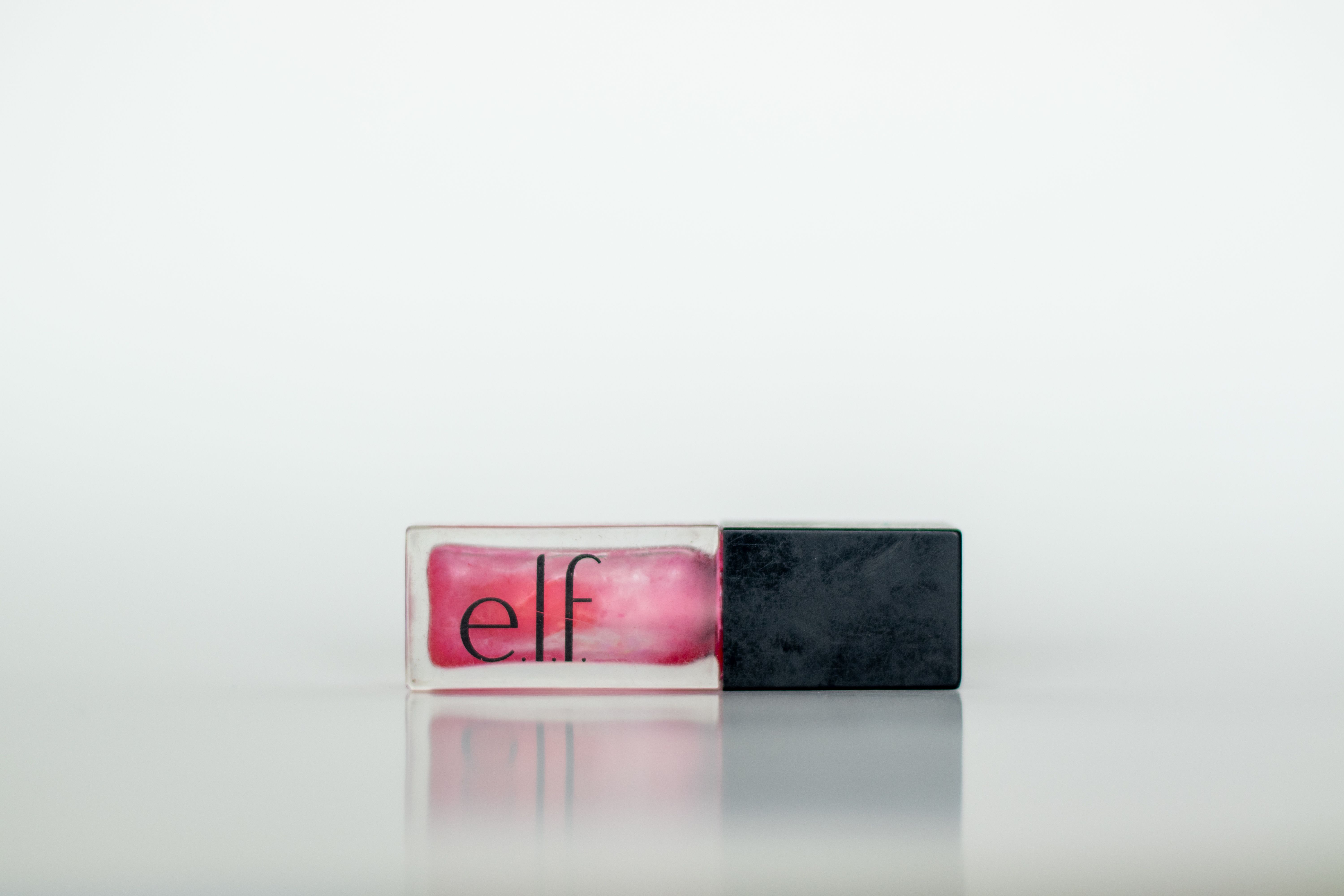
e.l.f. Beauty increased its marketing investment from approximately 7% to 25% of net sales while fiscal 2024 net sales rose 77% to $1.02 billion. The results show how sustained marketing investment, accessible pricing, product innovation, community participation, and broad retail distribution can work together to accelerate growth. For ecommerce brands, e.l.f. 's strategy also highlights the importance of the data infrastructure beneath campaigns. Opensend strengthens this invisible marketing layer by improving identity resolution, audience addressability, cross-device recognition, and the quality of signals brands activate across email, advertising, and retargeting platforms.
Key Takeaways
- e.l.f. increased marketing investment from approximately 7% to 25% of net sales as fiscal 2024 revenue grew 77% to $1.02 billion.
- The
#eyeslipsfaceTikTok campaign generated approximately 7 billion views and nearly 5 million user-generated videos. - Rapid campaign development allows e.l.f. to respond to cultural moments while they are still relevant.
- Beauty Squad supports direct customer relationships, product feedback, retention, and first-party data collection.
- Non-U.S. net sales grew 91% year over year in the first quarter of fiscal 2025 and represented 16% of total net sales.
- e.l.f.’s results come from a combination of product value, distribution, cultural relevance, marketing investment, and operational execution, not from one campaign or channel alone.
Crafting a Winning e.l.f. Marketing Strategy
e.l.f. has consistently grown faster than many established beauty companies by combining accessible products with culturally relevant marketing. In fiscal 2024, the company recorded its 21st consecutive quarter of net sales growth and market-share gains.
By the first quarter of fiscal 2025, that streak had reached 22 consecutive quarters. This consistency is important because it shows that e.l.f.’s strategy extends beyond one viral campaign.
Its growth model includes:
- Accessible pricing
- Fast product innovation
- Strong retail distribution
- Digital-first creative
- Community participation
- Sustained marketing investment
- International expansion
The brand’s execution provides useful lessons for companies building a modern beauty ecommerce strategy.
Counter-Cyclical Marketing Investment
e.l.f. increased marketing investment from approximately 7% of net sales five years earlier to around 25% in fiscal 2024. Marketing reached approximately 34% of net sales during the fourth quarter.
That spending coincided with several major results:
- Fiscal 2024 net sales increased 77% to $1.0239 billion.
- Unaided awareness among U.S. consumers increased substantially from 2020 levels.
- e.l.f. strengthened its position among younger beauty consumers.
- The company gained market share across several reporting periods.
However, higher marketing spending should not be treated as the sole cause of revenue growth. e.l.f. also benefited from product launches, retail expansion, ecommerce growth, category demand, and the acquisition of Naturium.
The lesson is not simply to spend more. Brands must connect investment to a differentiated value proposition, reliable distribution, strong creative, and measurable customer demand.
The Masstige Positioning Advantage
e.l.f. competes through a “masstige” model, combining elements associated with prestige beauty with mass-market pricing.
This positioning gives the company several advantages:
- Lower barriers to product trial
- Strong appeal among younger consumers
- Faster adoption of social-media trends
- Opportunities to create accessible alternatives to prestige products
- Broad distribution through mass retailers and ecommerce
e.l.f. Cosmetics products are vegan and cruelty-free. The company has also expanded production through Fair Trade Certified facilities. Its FY2025 impact reporting said that 73% of products across e.l.f. Beauty brands were produced in Fair Trade Certified facilities.
These standards reinforce the brand’s ethical positioning, but the Fair Trade claim should refer to certified facilities or qualifying production rather than describing every individual product as universally Fair Trade certified.
Digital Marketing Strategy Examples
e.l.f. 's digital strategy shows how social content, paid media, retail distribution, and ecommerce can support one another.
The #eyeslipsface Campaign
Working with Movers+Shakers, e.l.f. launched an original TikTok song and challenge based on the brand’s name.
The campaign generated:
- Approximately 7 billion views
- Nearly 5 million user-generated videos
- Participation from public figures including Lizzo, Ellen DeGeneres, Reese Witherspoon, and Kevin Hart
- A number-four position on Spotify’s global viral chart for the campaign song
Some reports say e.l.f. 's combined TikTok campaigns approached or exceeded 10 billion views. That larger number should not be attributed only to #eyeslipsface.
The campaign worked because it invited participation rather than asking viewers to passively watch an advertisement. Users could interpret the song, create their own videos, and distribute the campaign through their personal networks.
This approach turned customers and creators into voluntary media channels.
Rapid Campaign Development
Speed is another important part of e.l.f.’s marketing model. Amazon reported that the company’s first Big Game campaign in 2023 was developed in less than three weeks.
The company then expanded its Super Bowl presence with “Judge Beauty” in 2024. The campaign featured Judge Judy Sheindlin, Gina Torres, Rick Hoffman, Sarah Rafferty, Meghan Trainor, and other entertainers and creators.
Rather than relying only on a television spot, e.l.f. extended the campaign through:
- Social content
- Streaming media
- Ecommerce
- Amazon advertising
- Creator participation
- Public relations
- Retail visibility
This illustrates a core element of effective omnichannel marketing: a campaign should produce coordinated experiences across the places where customers discover, evaluate, and purchase products.
Unexpected Brand Collaborations
e.l.f. frequently collaborates with brands outside traditional beauty marketing.
Examples include:
- Liquid Death
- American Eagle
- Chipotle
- Dunkin’
- H&M
The Liquid Death “Corpse Paint” release was particularly effective. According to e.l.f. In fiscal 2024 reporting, the collaboration sold out in approximately 45 minutes, attracted a large share of new-to-brand buyers, and produced a triple-digit increase in website traffic.
These partnerships work because they combine audiences that may not normally overlap. They also create novelty, urgency, and earned-media coverage.
Building a Data-Driven Marketing Foundation
Viral creative can attract attention, but brands still need systems that convert that attention into durable customer relationships.
That requires:
- Reliable first-party profiles
- Customer preference data
- Cross-device recognition
- Accurate behavioral events
- Addressable audiences
- Strong email and advertising integrations
These capabilities support better customer segmentation, personalization, retention, and measurement.
The Beauty Squad Loyalty Engine
Beauty Squad gives e.l.f. a direct relationship with customers who might otherwise purchase only through a retailer.
The program encourages several valuable behaviors:
- Direct purchases
- Product reviews and feedback
- Profile and preference sharing
- Repeat visits
- Continued brand engagement
This information helps e.l.f. understand what customers purchase, which products attract interest, and how different customer groups respond to launches and promotions.
The program also supports customer retention by giving members reasons to return after their first purchase.
Digital Product Discovery
e.l.f. has invested in virtual try-on and digital product-discovery tools designed to reduce uncertainty when customers shop online.
Virtual tools can help shoppers:
- Explore shades
- Compare products
- Evaluate possible product fit
- Move from discovery to consideration
- Make more confident purchase decisions
These tools may also provide useful behavioral signals, such as which shades, products, or categories receive the most attention. Brands should evaluate their actual effect through controlled testing rather than assuming that every virtual experience automatically improves conversions.
Influencer and Community Marketing
e.l.f.’s influencer strategy does not depend exclusively on traditional celebrity endorsements. The company combines celebrities, creators, customers, employees, and community participation.
Listening Before Creating
e.l.f. executives frequently describe community listening as the starting point for campaign development.
This means analyzing:
- Customer comments
- Product requests
- Creator trends
- Search behavior
- Social conversations
- Emerging cultural moments
The company can then convert those signals into product ideas, creative concepts, partnerships, and media plans.
This reduces the risk of producing campaigns that are polished but disconnected from customer interests.
Platform-Specific Content
e.l.f. does not treat every platform as a place to post the same advertisement.
TikTok content emphasizes participation and entertainment. Instagram supports visual storytelling, product launches, and creator content. Streaming and television campaigns provide broader reach, while ecommerce and retail channels make the promoted products easy to purchase.
The strategy demonstrates why brands need both creative flexibility and reliable data. Each channel may use a different format, but the underlying customer journey should still be measurable and connected.
First-Party Data and Customer Identity
Privacy restrictions, browser limitations, and fragmented customer journeys make first-party identity increasingly important.
A shopper may:
- Discover a product on TikTok.
- Visit the website on a mobile device.
- Research reviews on another platform.
- Return on a laptop.
- Purchase through a retailer or ecommerce store.
- Join a loyalty program later.
Without identity resolution, these actions may appear to belong to several unrelated users.
A strong identity resolution layer helps brands connect eligible signals into more complete customer profiles. Better profiles can improve audience creation, personalization, retargeting, and marketing measurement.
International Expansion
In the first quarter of fiscal 2025, e.l.f. 's non-U.S. net sales grew 91% year over year and represented 16% of total net sales.
At the time, e.l.f. reported a retail presence in 14 countries, with additional availability through eShopWorld.
Its expansion included:
- Approximately 1,600 ROSSMANN stores in Germany
- A Douglas partnership in Italy
- Growth in the United Kingdom
- Distribution through Etos in the Netherlands
These figures describe a specific fiscal 2025 reporting period. They should not be presented as permanent growth rates or current 2026 market positions without updated supporting data.
Strengthen the Invisible Marketing Layer With Opensend
e.l.f.’s strategy demonstrates what happens when strong products, creative, community participation, distribution, and customer data reinforce one another.
However, many ecommerce brands lose marketing value before a campaign can fully perform. Anonymous traffic disappears, sessions remain fragmented, customer profiles become outdated, and advertising platforms receive incomplete identity signals.
Opensend’s platform strengthens the invisible marketing layer behind ecommerce growth. It helps brands improve identity resolution, audience addressability, cross-device recognition, profile quality, and the signals activated through marketing platforms.
Opensend should not be viewed only as an email-capture tool. Its broader role is to improve the identity and audience foundation that email, advertising, retargeting, segmentation, and measurement depend on.
How Opensend Supports Ecommerce Marketing
Opensend Connect: identifies eligible anonymous U.S. visitors and converts previously unknown traffic into addressable customer profiles.
Opensend Reconnect: helps recognize returning customers across devices, browsers, and sessions. This reduces identity fragmentation and strengthens first-party profiles.
Opensend Revive: replaces eligible bounced or outdated email addresses with active addresses belonging to the same customer, helping brands restore lost connections.
Opensend Personas: creates audience cohorts using behavioral, transactional, demographic, and lifestyle signals. These cohorts can support smarter targeting and campaign planning.
Together, these products help brands turn a larger share of existing traffic and customer data into usable marketing audiences.
Integration and Activation
Opensend offers plug-and-play connections with ecommerce and marketing platforms such as Shopify and Klaviyo. Setup requirements vary according to a brand’s storefront, tracking configuration, marketing stack, and selected Opensend products.
Once implemented, eligible profiles and audiences can support:
- Email campaigns
- Retargeting
- Customer segmentation
- Advertising activation
- Direct mail
- Profile enrichment
- Cross-device recognition
Brands can review Opensend success stories for examples across apparel, jewelry, home goods, health, food, sporting goods, and other ecommerce categories. Results vary by traffic volume, margins, audience quality, implementation, and campaign execution.
Frequently Asked Questions
How does Opensend support email marketing?
Opensend identifies eligible anonymous U.S. visitors and syncs addressable profiles into connected marketing systems. This gives brands more opportunities to communicate with high-intent shoppers who visited the site but did not complete a form or purchase.
What makes Opensend more than a visitor-identification tool?
Opensend supports the identity and signal layer beneath ecommerce marketing. In addition to identifying visitors, it can reconnect profiles across sessions, restore eligible bounced contacts, enrich customer records, and create more actionable audience segments.
How quickly can a brand implement Opensend?
Opensend provides plug-and-play integrations with major ecommerce and email platforms. The exact implementation time depends on the storefront, existing integrations, tracking setup, and products selected.
Does Opensend identify international visitors?
Opensend’s documented identity graph and shopper network are primarily focused on the United States. International brands may use the platform for eligible U.S. traffic, subject to their own consent, geographic, and compliance requirements.
What ROI can brands expect from Opensend?
There is no universal ROI that applies to every brand. Results depend on site traffic, average order value, margins, identification volume, email execution, audience activation, and campaign quality. Brands should compare incremental revenue and gross profit against platform and campaign costs rather than relying on a single headline multiple.
Get 1 month free for $1
Exclusive, blog only offer: Identify hidden visitors and boost conversions for only a dollar.


