

Dollar Shave Club Marketing Strategy (2026)


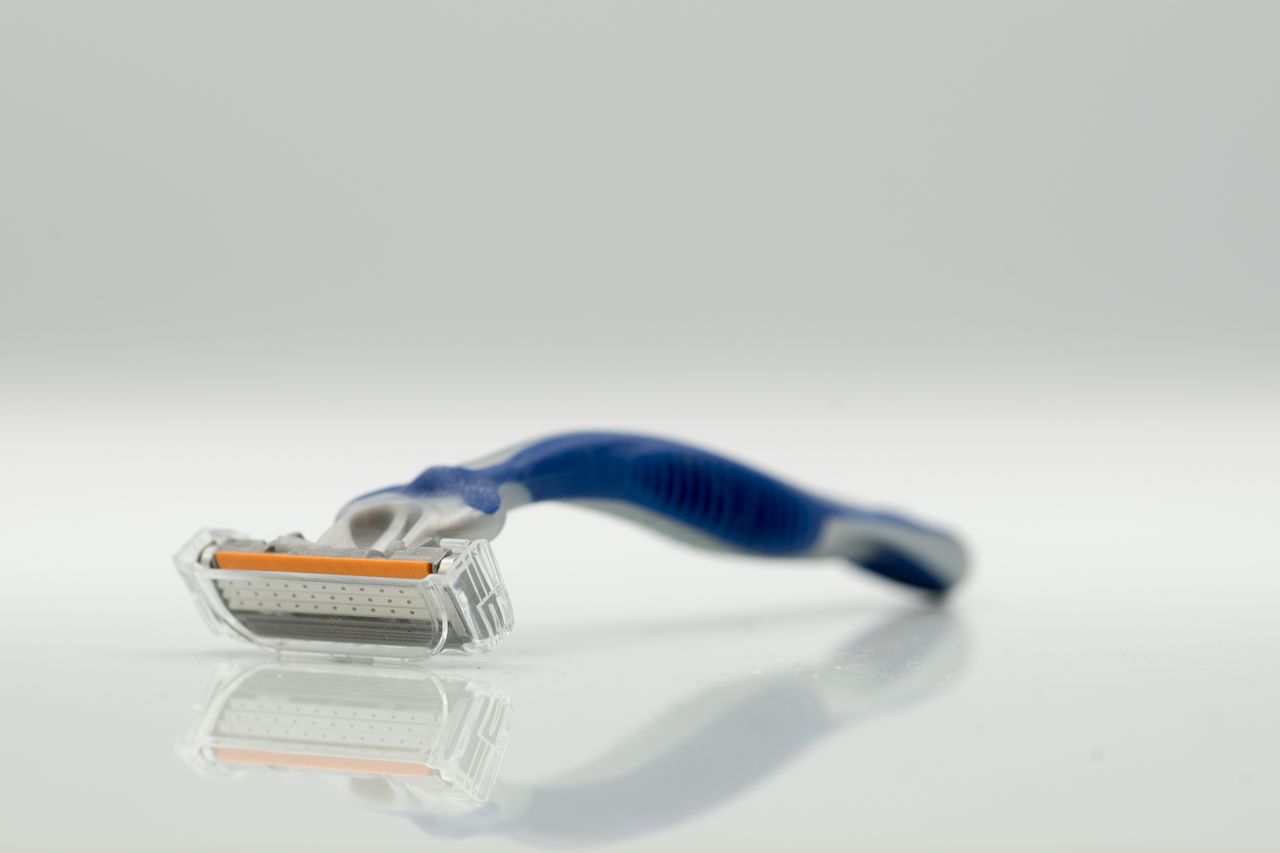
Dollar Shave Club rewrote the rules of DTC marketing with a $4,500 viral video in 2012, and in 2026, they're doing it again with AI-generated creative that's slashing marketing costs while reclaiming their irreverent brand voice. For subscription brands struggling with rising customer acquisition costs, DSC's playbook offers a masterclass in leveraging technology to improve channel performance across identity resolution, first-party data, creative efficiency, and omnichannel distribution. The foundation of their success rests on optimizing the invisible marketing layer that determines whether campaigns can actually identify, attribute, and convert high-intent visitors. Tools like Opensend's identity resolution platform address this foundational challenge by raising visitor identification rates and improving signal quality across every channel.
Key Takeaways
- Dollar Shave Club now produces 90% of advertising in-house, while AI is helping its internal team develop and launch creative faster; separately, its CRM consolidation reduced total cost of ownership by 30%+ and campaign setup time by 60%+
- Dollar Shave Club continues to operate a structured refer-a-friend program that rewards existing members while offering discounts to eligible new subscribers
- DSC's omnichannel expansion reached roughly 40,000 retail outlets during its major 2020-2021 rollout, adding brick-and-mortar distribution to its DTC subscription model
- The original viral video cost just $4,500 to produce and generated 28+ million lifetime views with 12,000 subscribers in the first 48 hours
- AI disclosure has become a brand differentiator, with DSC leaning into "obviously fake" AI imagery rather than hiding its use
- The Klaviyo integration enabled 237 million email/SMS messages in 12 months while reducing tech stack complexity
Crafting a Digital Marketing Strategy for Dollar Shave Club's Subscription Model in 2026
Dollar Shave Club's 2026 digital marketing strategy centers on one critical insight: brands don't just have a campaign problem, they have a signal and data problem. By optimizing the foundational data layer beneath their ads, email, and SMS, DSC has created efficiency gains that compound across every channel.
Optimizing the Subscription Journey
The subscription model lives and dies on customer lifecycle management. DSC's approach focuses on:
- Reducing churn through friction removal: Customers can skip shipments without canceling, add one-click upsells to upcoming orders, and manage subscriptions entirely through email flows
- Personalization at scale: With first-party data powering behavioral segmentation, DSC delivers targeted content based on purchase history, browsing behavior, and engagement patterns
- Attribution clarity: By reconciling platform-reported conversions against actual backend orders, DSC makes budget decisions based on real revenue rather than inflated dashboard numbers
Bill Hudak, VP of Acquisition and Retention at Dollar Shave Club, describes their tech stack philosophy: "We look at Klaviyo as our B2C CRM. I know we have our best, most continuous customer record in Klaviyo. You're going to have to pry Klaviyo from my cold dead hands."
Leveraging Personalization at Scale
The brand's customer retention strategies depend on understanding who's visiting their site and what they want. Most DTC sites identify only about 10% of their visitors, leaving 90% of high-intent traffic invisible to ad platforms.
DSC addresses this through:
- Cross-device identity stitching: Recognizing the same customer across mobile, desktop, and email touchpoints
- Behavioral clustering: Grouping anonymous visitors by browsing patterns before they've identified themselves
- Progressive profiling: Building richer customer profiles over time through value exchanges like style quizzes and product recommendations
Direct-to-Consumer Marketing Examples: Dollar Shave Club's Evolution
Dollar Shave Club's journey from DTC disruptor to omnichannel brand offers instructive lessons for any direct-to-consumer company navigating growth challenges.
Building a Strong DTC Brand Identity
The brand's identity has weathered significant transitions:
- 2012-2016 (Founder era): Irreverent, scrappy underdog challenging Gillette's razor cartel
- 2016-2023 (Unilever ownership): Voice became overly polished and "the humor more corporate," losing the authentic edge
- 2023-Present (Nexus Capital): Active reclamation of "troublemaker" persona through provocative campaigns like "Danglers" and "Size Matters"
Laura Higgins, Chief Brand and Innovation Officer, captures the strategic imperative: "We are the original troublemakers. We have to break through and be irreverent and different in order to break through the marketing clutter."
Leveraging Data for Personalized DTC Experiences
DTC success in 2026 requires treating customer data as strategic infrastructure, not just a marketing input. DSC's approach includes:
- Single customer view: Consolidating data from email, SMS, purchase history, and browsing behavior into unified profiles
- Real-time activation: Syncing identified visitors directly into email service providers and ad platforms without manual exports
- Server-side tracking: Capturing conversion events that browser pixels miss due to ad blockers and privacy restrictions, recovering significant lost events
For brands building similar capabilities, tools like Opensend's Reconnect ensure consistent identity recognition across devices, maintaining accurate customer profiles essential for DTC engagement.
Applying a Robust Marketing Strategy Framework to Dollar Shave Club in 2026
A marketing strategy framework for subscription brands must account for both acquisition efficiency and lifetime value optimization.
Strategic Pillars for Growth
DSC's 2026 framework rests on four pillars:
1. AI-Powered Creative Production
- 90% of advertising produced in-house
- AI used to accelerate creative development and production
- Campaigns can move from brief to launch in weeks rather than traditional agency timelines
- Agencies become "optional, not obsolete"
2. Omnichannel Distribution
- Large-scale retail distribution following a rollout that reached roughly 40,000 outlets beginning in 2020-2021
- Amazon presence alongside its own ecommerce channel and major retail distribution
- Subscription remains an important part of DSC's broader omnichannel model
3. First-Party Data Infrastructure
- Email/SMS as owned channels reducing platform dependency
- Cross-device identity for accurate customer attribution
- Progressive profiling building richer segments over time
4. Brand Voice Authenticity
- Return to humor-driven, bold messaging
- AI disclosure as brand differentiator ("disclosure over denial")
- "Obviously fake" AI imagery turning regulatory requirements into creative signatures
Measuring Success and Iteration
Key performance indicators for subscription brands:
Customer Acquisition Cost (CAC)
- What it measures: Cost to acquire a new subscriber
- Why it matters: Indicates channel efficiency
Lifetime Value (LTV)
- What it measures: Total revenue from a customer
- Why it matters: Justifies acquisition spend
LTV:CAC Ratio
- What it measures: Profitability of customer acquisition
- Why it matters: Target 3:1 or higher for sustainable growth
Churn Rate
- What it measures: Subscribers canceling per period
- Why it matters: Retention effectiveness
Referral Rate
- What it measures: New customers from existing subscribers
- Why it matters: Organic growth potential
Match Rate
- What it measures: Conversions platforms can attribute
- Why it matters: Signal quality indicator
Innovating the Subscription Business Model Example: Dollar Shave Club's Next Chapter
DSC's subscription model evolution demonstrates how mature brands can extend beyond their core offering while maintaining the convenience that drives recurring revenue.
Enhancing Member Value
The 2026 subscription model includes:
- Core razor subscription: The original offering with flexible delivery schedules
- Grooming product add-ons: One-click additions to upcoming shipments increase average order value
- Referral rewards: Current members can receive a single-use 50% discount code for one eligible non-razor product for each valid referral, up to nine referrals
- New member incentives: Eligible referred customers can receive 30% off a new subscription
Dollar Shave Club's continued investment in a structured refer-a-friend program demonstrates how subscription brands can use member advocacy to support customer acquisition.
Strategies for Sustainable Growth
Product line expansion in 2026 includes DSC's first women's razor line, launched with dual creative approaches:
- Traditional filmed video for established audience segments
- AI-generated content for emerging channels
- Channel-specific optimization without doubling production budgets
For subscription brands looking to maintain communication with their customer base, tools like Opensend's Revive can restore deliverability for bounced email addresses, a critical capability when email remains a primary retention channel.
Leveraging Digital Marketing Strategy Examples for Dollar Shave Club
DSC's 2026 campaigns provide concrete examples of digital marketing execution across multiple channels.
Multi-Channel Digital Activation
AI-Generated Campaigns:
- "250 Years. No BS. Still Free" (July 2026) featuring animated Revolutionary War paintings
- Women's razor launch with AI-produced creative for specific channels
- Complex visual elements (skyscrapers shaped like razors, oversized George Washington heads) completed in weeks rather than months
Email & SMS Execution:
- 237 million messages sent over 12 months
- Behavioral triggers for abandoned carts, subscription management, and win-back campaigns
- Integration with Klaviyo as primary CRM enabling real-time personalization
Retail Support:
- "We Got You" campaign supporting the major retail expansion
- Retail-specific products like "6 Blade vs 4 Blade Razor Starter Set"
- Channel-appropriate creative without cannibalizing DTC subscriptions
Data-Driven Campaign Optimization
DSC's efficiency gains come from improving the data foundation underneath campaigns:
- Server-side tracking captures conversions that browser pixels miss, feeding platforms more complete conversion datasets
- Identity resolution turns anonymous traffic into addressable audiences, improving retargeting performance and lookalike quality
- Event deduplication prevents double-counting conversions that inflate reported ROAS
Brands implementing similar infrastructure can leverage Opensend's Ignite for server-side conversion tracking that improves event match quality across Meta CAPI, Google Enhanced Conversions, and TikTok Events API.
Achieving Viral Marketing Examples with Dollar Shave Club's Brand Storytelling
The 2012 viral video remains a masterclass in content marketing ROI, and the brand is applying those principles with new technology in 2026.
Crafting Shareable Content
The original viral formula:
- Production cost: $4,500
- Lifetime views: 28+ million
- First 48-hour subscribers: 12,000
- Key elements: Humor, founder authenticity, direct challenge to incumbents, memorable tagline
The 2026 evolution maintains core principles while leveraging AI:
-
"Disclosure over denial": Leaning into obviously fake AI imagery (eagles chasing hot dogs, Revolutionary War animations)
-
Speed to market: Completing complex campaigns in weeks rather than months
-
Brand voice protection: In-house production ensuring message consistency
The Role of Authentic Brand Voice
Laura Higgins on the strategic approach: "We want to make sure not to lie to our consumers" regarding AI usage, turning a potential liability into brand differentiation.
This authenticity extends to:
- Acknowledging the Unilever-era brand dilution rather than ignoring it
- Bold campaigns like "Danglers" that competitors wouldn't risk
- Irreverent social media presence maintaining founder-era energy
Optimizing Dollar Shave Club's Direct-to-Consumer Model for 2026
The DTC model's success in 2026 depends on data infrastructure as much as creative execution.
Enhancing the Customer Journey
Acquisition Phase:
- AI-assisted ad creative helping reduce production costs and accelerate execution
- Referral program supporting subscriber acquisition
- Multi-channel attribution reconciling platform claims against actual orders
Onboarding Phase:
- Welcome flows triggered by subscription activation
- Product education through email sequences
- Cross-sell recommendations based on purchase data
Retention Phase:
- Skip-a-shipment functionality reducing cancellations
- Loyalty points rewarding continued engagement
- Win-back campaigns for lapsed subscribers
Advocacy Phase:
- Referral rewards tied to valid new-subscriber referrals
- Social sharing incentives
- User-generated content integration
Leveraging Data for Competitive Advantage
The invisible marketing layer powering DSC's DTC model includes:
- Identity resolution: Connecting fragmented signals (email, phone, device IDs, behavioral events) into unified customer profiles
- Match rate optimization: Sending richer identifiers to platforms improves attribution accuracy. Email alone matches around 50%, while adding phone, name, and postal address can push rates above 80%
- Cross-device stitching: Recognizing returning customers across browsers and devices ensures accurate lifecycle triggers
For DTC brands building similar capabilities, the goal is raising identification rate, the percentage of visitors platforms can see and optimize against.
Building a Modern Marketing Strategy Template for Dollar Shave Club
A practical marketing strategy template for subscription brands in 2026:
Key Components of a Robust Plan
1. Mission & Positioning
- Core value proposition: Convenience + quality + value
- Brand personality: Irreverent troublemaker
- Competitive differentiation: AI-powered creative velocity
2. Target Audience Definition
- Primary: Men 18-45 seeking grooming convenience
- Expansion: Women's grooming (new 2026 segment)
- Behavioral: Subscription-comfortable, digitally native
3. Channel Strategy
Paid Social
- Role: Acquisition
- Key metrics: CAC, ROAS
Email/SMS
- Role: Retention
- Key metrics: Open rate, revenue per send
Retail
- Role: Awareness/Trial
- Key metrics: Sell-through rate
Referral
- Role: Organic Growth
- Key metrics: Referral rate, conversion
4. Technology Stack
- CRM/ESP: Klaviyo (email, SMS, customer data)
- Tracking: Server-side events + browser pixel (deduplicated)
- Identity: Cross-device resolution for accurate attribution
- Creative: In-house AI tools + selective agency partnerships
Implementation and Monitoring
Weekly Cadence:
- Campaign performance review
- Email/SMS engagement metrics
- Referral program tracking
Monthly Cadence:
- CAC and LTV calculations
- Churn analysis
- Channel attribution reconciliation
Quarterly Cadence:
- Incrementality testing (geo holdouts, lift studies)
- Tech stack audit
- Strategic roadmap review
Why Opensend Powers Subscription Marketing Success
Dollar Shave Club's success in 2026 stems from optimizing the invisible marketing layer: identity, signal quality, match rates, and audience addressability. For subscription and DTC brands looking to build similar infrastructure, Opensend provides the foundational data layer that makes every channel perform better.
Core Capabilities for Subscription Brands
Connect: Identifies previously anonymous visitors browsing your site and syncs actionable profiles into marketing tools. For subscription brands, this raises the share of high-intent traffic that can become addressable for follow-up and retargeting.
Reconnect: Maintains customer identity across devices and browsers, ensuring accurate lifecycle flows trigger correctly. When a subscriber browses on mobile and checks out on desktop, Reconnect recognizes them as one customer journey, not two separate "people."
Ignite: Server-side conversion tracking helps recover events that browser-based tracking can miss due to ad blockers and privacy restrictions. Combined with richer identifiers and cleaner event payloads, stronger server-side signals can improve platform matching, attribution, and optimization.
Personas: AI-powered segmentation groups customers into behavioral cohorts based on purchase patterns, engagement history, and browsing behavior, enabling personalized messaging without manual segmentation work.
Proven Results for DTC Brands
Opensend's fashion and apparel clients demonstrate the impact of strengthening the identity layer:
- Kut from the Kloth: Generated $107,000 in 30 days with 48X ROI
- True Classic: Achieved 5.44X ROI within 7 days via controlled testing
- Benchmade: Produced $85,000 in 30 days with 12X ROI
For subscription brands seeking to reduce CAC while improving retention, Opensend's identity and signal layer provides the data foundation that makes both possible. Explore pricing plans or success stories to see what's possible for your brand.
Frequently Asked Questions
How does Opensend help subscription brands identify anonymous website visitors?
Opensend Connect identifies previously anonymous visitors by matching browsing signals to known profiles, then syncs these enriched profiles directly into your email service provider and ad platforms. For subscription brands, this means you can capture high-intent visitors who browse your site but don't immediately subscribe, turning them into addressable audiences for abandoned browse campaigns, retargeting, and nurture flows. The result is a higher identification rate across your traffic, giving platforms better signals to optimize against.
What makes Opensend different from standard pixel tracking for subscription businesses?
Standard browser pixels miss significant conversion data due to ad blockers, iOS privacy restrictions, and cookie limitations. Opensend Ignite uses server-side conversion tracking to recover events that client-side pixels can't capture, sending cleaner, more complete conversion signals to advertising platforms. Combined with richer identity payloads (email, phone, postal data), this approach improves match rates and attribution accuracy, helping subscription brands understand true customer acquisition costs and lifetime value.
Can Opensend integrate with existing subscription marketing tools like Klaviyo?
Yes. Opensend is built to work seamlessly with leading subscription marketing platforms. Connect syncs identified visitor profiles directly into Klaviyo and other ESPs in real-time, while Reconnect maintains consistent customer identity across devices so your lifecycle flows trigger accurately. Ignite works alongside your existing Meta CAPI, Google Enhanced Conversions, and TikTok Events API implementations, strengthening the conversion signals those platforms receive without requiring you to replace your current tech stack.
How quickly can subscription brands see ROI from Opensend?
Opensend clients typically see measurable results within the first 30 days. True Classic achieved 5.44X ROI within 7 days of implementation, while Kut from the Kloth generated $107,000 in revenue in their first 30 days with 48X ROI. Because Opensend strengthens the foundational data layer beneath your existing campaigns rather than requiring new channel buildout, efficiency gains compound quickly across email, SMS, and paid advertising without significant operational changes.
What pricing model does Opensend use for subscription businesses?
Opensend offers transparent pricing tailored to subscription brand needs, with plans based on your website traffic volume and specific feature requirements. Unlike platforms that charge per contact or impose surprise overage fees, Opensend's model is designed to scale predictably with your business. Explore detailed pricing information or schedule a demo to see which plan aligns with your current traffic and growth projections.
Get 1 month free for $1
Exclusive, blog only offer: Identify hidden visitors and boost conversions for only a dollar.


