

Kylie Cosmetics Marketing Strategy (2026)


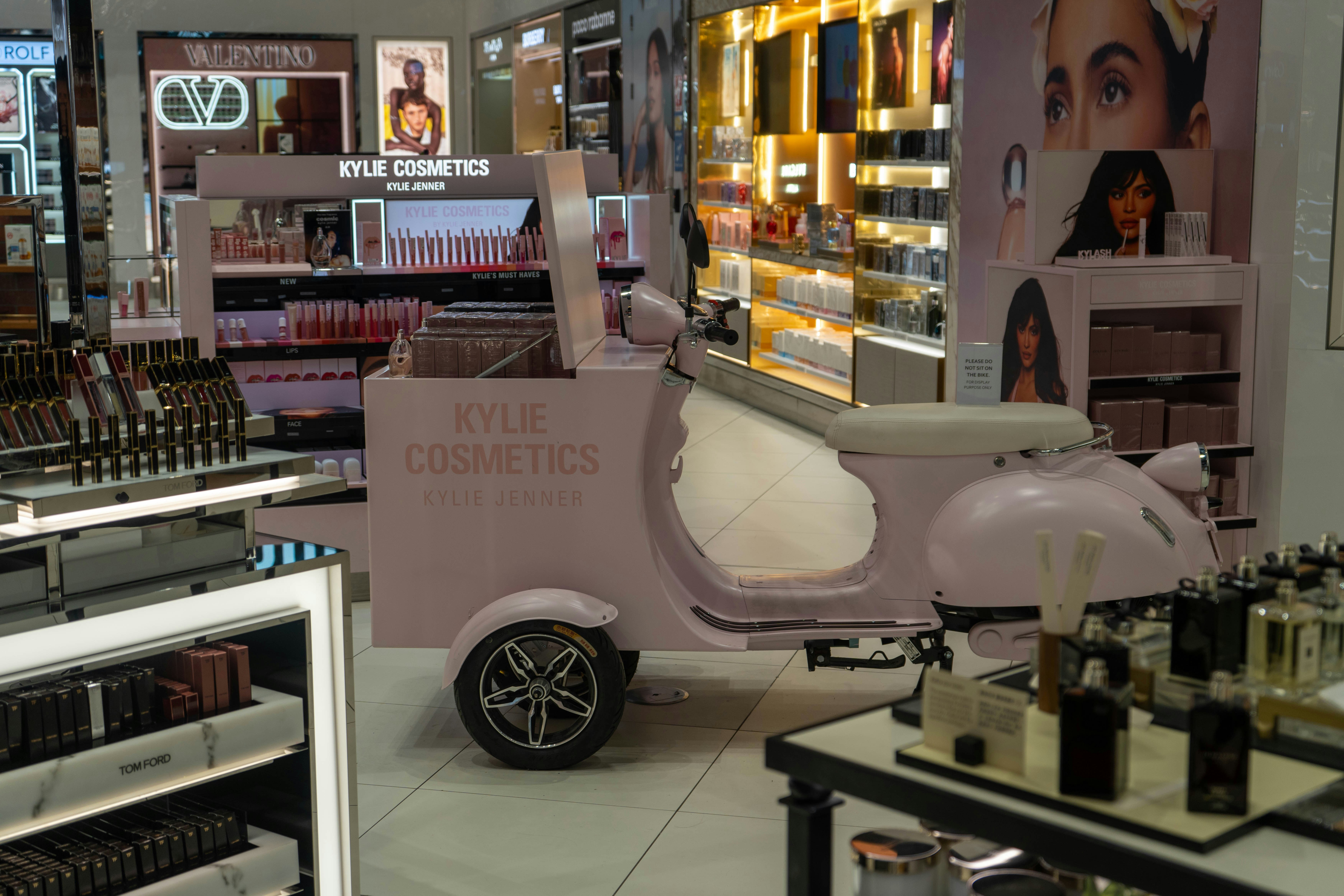
Kylie Cosmetics generated a reported $420 million in retail sales within roughly 18 months, driven primarily by Kylie Jenner's social media reach rather than traditional advertising. The brand's approach centers on treating social media as infrastructure, engineering strategic scarcity, and capturing customer data at every touchpoint. For ecommerce brands looking to replicate these results in 2026, the playbook offers critical lessons on turning anonymous traffic into loyal customers. However, replicating this success requires proper identity resolution infrastructure to capture and activate first-party data at scale.
Key Takeaways
- Kylie Cosmetics achieved 3.2% engagement rates, 4.6x higher than the industry average, by treating social media as complete marketing infrastructure
- The 15-minute scarcity drop model creates cultural events, with products selling out in under one minute when demand is properly built
- The brand's direct-to-consumer model supports repeat purchasing and personalized customer engagement, while Coty's 2019 transaction materials reported more than 50% repeat purchase among Kylie Skin customers
- 2026 influencer data shows 9,500 sponsored posts in 12 months, with TikTok dominating at 55.8%
- Despite exceptional execution, KylieCosmetics.com's estimated ecommerce sales declined substantially from their earlier peak, showing how even strong marketing must evolve alongside changing consumer demand, distribution, and product strategy
The Kylie Cosmetics Marketing Framework: Social Media as Complete Infrastructure
Most beauty brands treat social media as one channel among many. Kylie Cosmetics treated it as the entire marketing and distribution system, a strategic choice that redefined what's possible for direct-to-consumer brands.
Why Traditional Advertising Became Obsolete
The brand bypassed traditional advertising entirely by building an audience before building sales infrastructure. Emily Bruce, a digital marketing strategy analyst, noted that Kylie Cosmetics doesn't do much paid advertising, instead focusing on social media and inbound marketing through blogging and email updates.
The results speak for themselves:
- 400+ million combined social followers across Kylie Jenner's personal accounts
- 25.7 million followers on the brand's official Instagram
- 3.2% average engagement rate versus 0.7% industry benchmark
- Instagram accounts for 63.57% of social media traffic to the brand
This approach works because modern consumers want to belong to something, not just buy something. Frank Velasquez, Social Media Strategist at Your Social Strategy, explains: "The Kylie Cosmetics marketing strategy succeeded because it was built on a genuine insight: modern consumers want to belong to something, not just buy something. The scarcity, the storytelling, the social proof all of it served that single underlying truth."
Platform-Specific Execution
Kylie Cosmetics doesn't treat all platforms equally. Each serves a distinct purpose in the customer journey:
Instagram: The brand's primary revenue driver, handling product launches, behind-the-scenes content, and community engagement. The account maintains consistent visual aesthetics that reinforce brand identity.
TikTok: Now dominates influencer marketing with 55.8% of sponsored content, up from Instagram's 32.2%. Short-form video drives discovery among younger demographics.
Snapchat: Original platform for real-time, unpolished content that builds authentic connection with followers.
YouTube: Longer tutorials and product demonstrations that convert browsers into buyers.
For beauty and cosmetics ecommerce brands, this multi-platform strategy demonstrates the importance of meeting customers where they already spend time rather than forcing them to a single touchpoint.
The 15-Minute Scarcity Drop Model: Engineering Urgency at Scale
The first Kylie Lip Kit launch sold 15,000 units in under one minute. This wasn't accidental; it was deliberately engineered inventory management designed to activate consumer psychology.
How Scarcity Creates Cultural Moments
Strategic scarcity transforms product launches from transactions into events. The mechanics are straightforward but require precise execution:
- Limited inventory releases create genuine supply constraints
- Pre-launch content builds anticipation over 2-4 weeks
- Countdown timers compress decision-making windows
- Sold-out messaging validates the purchase for those who succeeded
Consumer research shows 73% of beauty purchases are driven by exclusivity and 91% of consumers value early access opportunities. Kylie Cosmetics activates both triggers simultaneously.
The 5-Phase Loyalty Loop
Behind every successful drop is a retention system that converts one-time buyers into repeat customers:
- Phase 1 – Discovery: Social content introduces new products without hard selling
- Phase 2 – Anticipation: Pre-launch teasers, countdown content, and waitlist signup
- Phase 3 – Event: The drop itself, typically selling out in 15 minutes
- Phase 4 – Community Validation: User-generated content sharing, reviews, unboxings
- Phase 5 – Re-engagement: Teasers for the next drop before excitement fades
This loop is designed to encourage repeat purchasing by moving customers from product discovery to launch participation, community validation, and re-engagement. The direct-to-consumer model capturing first-party data at every touchpoint enables this personalized approach.
For brands implementing similar strategies, capturing visitor data at the anticipation phase is critical. Tools that identify anonymous website visitors can dramatically expand the addressable audience for waitlist and early-access campaigns.
Influencer Marketing at Scale: 9,500 Sponsored Posts in 12 Months
Analysis of 2026 data reveals Kylie Cosmetics sponsored 9,500 pieces of influencer content over 12 months, averaging 792 sponsored posts monthly. But the most interesting finding isn't the volume; it's the distribution.
The Micro-Influencer Paradox
Despite Kylie Jenner's massive personal following, 36.1% of brand partnerships feature creators averaging only 1K-5K views. This counter-intuitive approach prioritizes niche authenticity over pure reach.
Platform breakdown for 2026:
- TikTok: 55.8% of sponsored content
- Instagram: 32.2%
- YouTube: 12%
Only 3% of influencers become repeat partners, with the most consistent collaborator posting across 8 months with 26 total posts. This suggests the brand continuously tests new voices rather than relying on a fixed roster.
Why This Strategy Works
Micro-influencers deliver:
- Higher engagement rates than celebrity posts
- Greater authenticity perceived by audiences
- More cost-effective content production at scale
- Diverse audience segments that large influencers can't reach
For ecommerce marketers tracking influencer engagement performance, this data suggests that breadth of creator partnerships often outperforms depth with a small number of high-reach accounts.
Connecting Influencer Traffic to Customer Identity
The gap in most influencer strategies isn't content creation, it's connecting campaign traffic to customer identity. When influencer posts drive visitors to your site, the majority arrive anonymously. Without identity resolution tools, brands lose the ability to:
- Retarget interested visitors who didn't convert
- Build lookalike audiences from high-intent traffic
- Attribute revenue to specific creator partnerships
- Optimize future campaigns based on customer quality, not just traffic volume
The Direct-to-Consumer Data Engine: Capturing First-Party Intelligence
Kylie Cosmetics operates primarily through a DTC model that captures first-party data at every touchpoint. In Coty's 2019 transaction materials, Kylie Beauty's channel mix was approximately 50% DTC and 50% retail, although the current Kylie-specific split is not separately disclosed.
Why DTC Drives Superior Retention
The direct model provides advantages that wholesale distribution cannot:
- Complete customer data ownership for personalization
- Email and SMS opt-in capture at every transaction
- Waitlist management that builds anticipation
- Website traffic reaching 3-5 million monthly visits during launch windows
This data infrastructure enables the personalized email sequences, SMS early access, and loyalty loop mechanics that drive repeat purchasing.
The Anonymous Visitor Problem
However, even with millions of monthly visitors, most DTC sites identify only about 10% of their traffic. The remaining 90% leave without a profile, audience attachment, or retargeting hook.
For beauty brands specifically, this represents significant lost opportunity:
- High-intent browsers who viewed products but didn't add to cart
- Comparison shoppers evaluating against competitors
- Price-sensitive visitors waiting for a promotion
- Mobile researchers who plan to purchase later on desktop
Cross-device identification becomes critical when shoppers browse on mobile during commute and purchase on desktop later. Without session stitching across devices, that appears as two separate visitors rather than one customer journey, corrupting reporting and missing retargeting opportunities.
2026 Market Challenges: Why Marketing Excellence Has Limits
Despite exceptional marketing execution, Kylie Cosmetics faces significant headwinds in 2026. Durham University researcher Chutong Feng observed that the brand "has been gradually outcompeted by its competitors with declining sales while competitors doubled in years."
The Numbers Behind the Decline
The revenue trajectory tells a sobering story. Estimates placed KylieCosmetics.com's online sales at approximately $29 million in 2024, down substantially from an estimated $68.7 million in 2017. The 2021 vegan/clean beauty rebrand received mixed reception.
Competitive Pressure Intensifies
The beauty market projected to reach $750 billion by 2026 attracts intense competition:
- 50+ celebrities have launched beauty brands in the past three years
- K-beauty dominance in innovation ($1.4B exported to U.S. Jan-Oct 2024)
- Platform algorithm changes reduce organic reach, requiring paid amplification
- Gen Alpha emergence (ages 10-15) as an influential market segment with different preferences
Lessons for Ecommerce Brands
Kylie's challenges illustrate a critical principle: marketing tactics have a limited shelf life. When competitors adopt similar scarcity mechanics, influencer strategies, and social-first positioning, differentiation erodes.
The brands winning in 2026 combine:
- Strong identity and data infrastructure that competitors can't easily replicate
- Continuous product innovation that gives marketing something new to promote
- Owned audiences not dependent on platform algorithms
- Attribution systems that identify what actually drives profitable growth
Applying Kylie's Strategy to Your Beauty Brand
For beauty and cosmetics brands looking to implement similar strategies, the playbook requires adaptation to smaller scale and tighter budgets.
Phase 1: Build Community Before Sales (Months 1-3)
- Document product development authentically on TikTok and Instagram
- Build email list through waitlist and early access signups
- Focus on engagement rate over follower count
Phase 2: Launch with Engineered Scarcity (Months 4-6)
- Start with limited inventory to create genuine sell-outs
- Use countdown timers and real-time stock levels
- Capture abandoned cart and browse data for retargeting
Phase 3: Scale with Data (Months 7-12)
- Implement customer segmentation based on purchase behavior
- Deploy AI-powered product recommendations
- Build cross-device identity stitching for unified customer views
Critical Infrastructure Requirements
The tactics work only with proper data infrastructure:
- Visitor identification to capture anonymous traffic
- Server-side tracking to recover conversion data lost to ad blockers and iOS restrictions
- Cross-device recognition to unify customer journeys
- Email deliverability to ensure messages reach the inbox
Without this foundation, even perfect marketing execution leaks significant value.
Why Opensend Is Critical for Beauty Brands Scaling Kylie-Style Growth
The Kylie Cosmetics playbook works brilliantly for brands with Kylie Jenner's 400+ million follower advantage. For everyone else, success depends on maximizing every visitor, every session, and every customer touchpoint through superior identity resolution and data activation.
Opensend operates as the invisible data layer beneath ecommerce marketing, the identity, signal quality, and audience addressability infrastructure that determines how well every channel performs. For beauty brands implementing Kylie-style strategies, this foundation becomes critical at three stages:
Capturing High-Intent Visitors During Product Drops
When scarcity-driven launches send traffic surging, most visitors arrive anonymously. Opensend Connect identifies approximately 25-35% of previously anonymous visitors and syncs actionable profiles into supported marketing platforms without requiring an on-site form fill, using consent-based, opt-in consumer identity data.
This means:
- Waitlist abandoners become retargeting candidates
- Product page browsers receive personalized follow-up
- Mobile researchers get recognized when they return on desktop
Maintaining Identity Across Devices and Sessions
Beauty shoppers frequently browse on mobile and purchase on desktop. Opensend Reconnect stitches sessions across devices and browsers, ensuring:
- Abandoned cart emails fire correctly regardless of device switching
- Customer profiles don't fragment into multiple records
- Attribution accurately credits the original traffic source
Recovering Lost Customer Reach
Email list decay affects every brand, subscribers change addresses, accounts bounce, engagement drops. Opensend Revive identifies subscribers whose addresses have become invalid and replaces them with current, active emails for the same individuals, restoring reach without requiring re-permission.
Proven Beauty Brand Results
Opensend's beauty clients report significant returns. Average email open rates reach 50-68% across case studies, with individual brands reporting varying ROI results depending on audience, traffic, and campaign execution. Setup requires under 5 minutes with Shopify app installation.
The platform operates on consent-based, opt-in data compliant with CAN-SPAM and CCPA, using cookie-less, encrypted matching, essential as privacy regulations continue evolving.
For beauty brands scaling from six to seven figures, Opensend provides the identity infrastructure that makes scarcity drops, influencer campaigns, and DTC retention loops measurably more effective by ensuring every high-intent visitor becomes an addressable, retargetable customer profile.
Frequently Asked Questions
How did Kylie Cosmetics achieve $420 million in revenue without traditional advertising?
Kylie Cosmetics generated reported $420 million in retail sales within roughly 18 months by leveraging Kylie Jenner's 400+ million social media following as free distribution. The brand launched with only 15,000 units, validated demand instantly through social engagement, and scaled based on real-time feedback. This approach achieved 3.2% engagement rates, 4.6x higher than the 0.7% industry average.
What is the 15-minute drop model and why does it work?
The 15-minute drop model is an engineered scarcity system where products sell out within 15 minutes of launch, creating intense buying moments that feel like cultural events. Consumer psychology research shows 73% of beauty purchases are driven by exclusivity and 91% value early access. This urgency compresses decision-making windows and drives immediate conversion. For brands without Kylie's reach, Opensend helps maximize every visitor by identifying anonymous traffic and enabling precise retargeting during and after launch events.
How does Kylie Cosmetics use influencer marketing in 2026?
In 2026, Kylie Cosmetics sponsored 9,500 influencer posts annually across TikTok (55.8%), Instagram (32.2%), and YouTube (12%). Notably, 36.1% of partnerships feature micro-creators with only 1K-5K average views, prioritizing niche authenticity over pure reach. Only 3% of influencers become repeat partners. Opensend enables brands to identify and retarget traffic from influencer campaigns, connecting creator partnerships to actual customer acquisition and lifetime value.
Why is Kylie Cosmetics facing declining revenue despite strong marketing?
Despite exceptional marketing execution, the brand's estimated online-store sales declined substantially from their 2017 level due to market saturation, 50+ celebrity beauty brand launches, rising K-beauty competition, and the limits of scarcity tactics without continuous product innovation. This demonstrates that marketing excellence alone cannot sustain growth when competitors adopt similar strategies. Opensend helps brands maximize marketing efficiency by ensuring visitor identity capture and cross-channel attribution that reveals which tactics actually drive profitable growth.
How can smaller beauty brands apply Kylie's marketing strategy?
Smaller brands can adapt the strategy by building community through authentic social content before launching sales (months 1-3), engineering scarcity with limited initial inventory (months 4-6), and scaling with customer segmentation and cross-device identity stitching (months 7-12). Critical infrastructure includes visitor identification, server-side tracking, and email deliverability systems. Opensend provides this foundation by identifying 25-35% of anonymous visitors, stitching cross-device sessions, and recovering email deliverability, all through consent-based, opt-in identity resolution that takes under 5 minutes to implement.
Get 1 month free for $1
Exclusive, blog only offer: Identify hidden visitors and boost conversions for only a dollar.


